Article
2026/06/09
The headlines are hard to ignore. AI is reshaping software development faster than almost anyone predicted. With this has come a wave of genuine anxiety about what this means for the people who write code for a living. Onja places developers in remote positions at a range of highly respected tech teams all over Europe and the US. Our developers work in small, medium and big companies across a broad range of industries, from SaaS platforms for global shipping, to software consultancies, to load restraint companies. This position gives us a unique finger on the pulse of the industry at large.
Influential voices in business and technology have been vocal about AI's impact on headcount. Meta's reduction of its workforce, where Mark Zuckerberg framed people costs as a resource allocation trade off against AI compute, is a clear example of this playing out at scale. It's not the only one. Salesforce CEO Marc Benioff previously announced the company would not be hiring any further software engineers in 2025, citing a 30% productivity boost from AI tools. Whether that hiring freeze becomes something more permanent remains to be seen.
For a social enterprise like Onja, whose model is built around training underprivileged young people to become software engineers, this raises serious questions. Are we training people for a profession that's contracting?
Embracing AI also means understanding its limitations. Part of responsible AI usage is knowing where caution is warranted. Our developers are being trained to keep the following in mind:
Rework is a real risk. AI-generated code can look correct and still be subtly wrong. The discipline required is understanding the output, not just reviewing it. Is it actually solving the right problem? Is it creating issues somewhere else in the codebase? Is it adding technical debt that someone will have to deal with later? Whether the right check is reviewing diffs, running tests, or looking at how new code sits against the wider architecture depends on the situation and the organisation’s engineering culture.
Security and compliance are worth taking seriously. AI tools vary significantly in how they handle data, and the companies our developers work with each have their own policies on approved tooling. Being aware of those boundaries, and working within them, is part of using AI responsibly in a professional context.
Greenfield and brownfield tasks call for different approaches. AI assistance tends to work well on contained, well-defined tasks, generating a new component, writing a utility function, or scaffolding a new feature. On higher-level tasks involving architecture decisions, understanding complex business logic, or navigating deeply interconnected parts of an existing codebase, the output requires much more scrutiny. The broader the context a task demands, the more judgment the developer needs to bring.
Codebase complexity affects AI reliability. On small, self-contained projects, AI tools can navigate the full context easily. In large enterprise codebases with hundreds of files, intricate module relationships, and long histories of technical decisions, being intentional about scaffolding and providing explicit context is key to ensure codebase quality is maintained.. Knowing how to maintain codebase quality standards while increasing throughput by leveraging AI tools is a skill in itself.
Coverage varies significantly across languages and frameworks. AI coding tools perform best with widely used technologies: JavaScript, TypeScript, Python, React, and similar mainstream choices. More niche languages, newer frameworks, or highly specialised tooling may fall outside the model's effective range. Our developers working in these spaces need to apply additional scrutiny rather than assuming the same accuracy they'd experience with a mainstream stack.
Many of the organisations we work with are navigating their own version of this shift. We’ve seen more companies integrating AI into their products, restructuring developer workflows, or repositioning their service lines to meet new market demands.
We see Onja as a partner in bridging this current situation. Our Malagasy developers came from the least likely of starting points. They learned English in a year, were writing production code within 18 months, and have integrated into international engineering teams unlike anything in their previous experience. Adapting to new conditions is something they do well.
Our mentorship team has recently begun tracking AI adoption internally through a developer satisfaction survey. The results are encouraging, with all of our developers using AI tools at least weekly and the majority using them daily. In April, AI-authored code across the team averaged 21.8%. We find this reflects where our team is right now, working primarily within complex existing codebases and building AI habits deliberately rather than at pace. For context, DX's Q1 2026 analysis of 500+ organisations put the industry figure at around 27%, noting that most teams are still adapting their workflows to newer tooling. As that process continues for our developers, we expect our figure to grow.
Staying competitive means our developers need to be AI-proficient, and we're making that happen. Beyond individual training, we're also bringing in external voices, software development veterans providing thought leadership on where the industry is heading and what it demands, supported by our senior enterprise team.
The Onja developer of the near future is technically grounded, genuinely fluent in AI tooling, and sharp enough to know when to trust it. They can work at pace, communicate clearly with a global team, and bring considered judgment to the higher-level decisions that AI can't make. That profile is what we're building toward, because we believe it's what will serve our partners and the communities we aim to uplift.
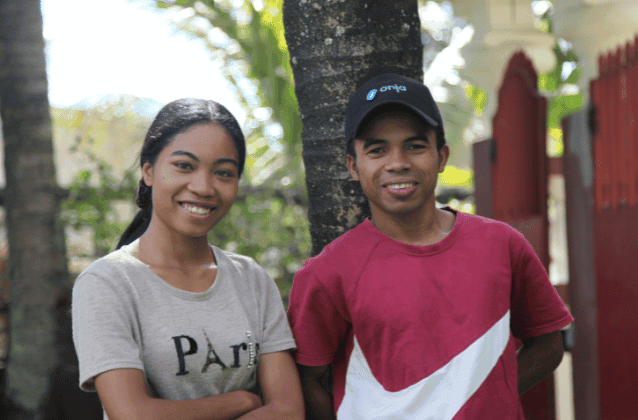
Learn about how Onja's model connects talented young people with remote work in US and European countries...
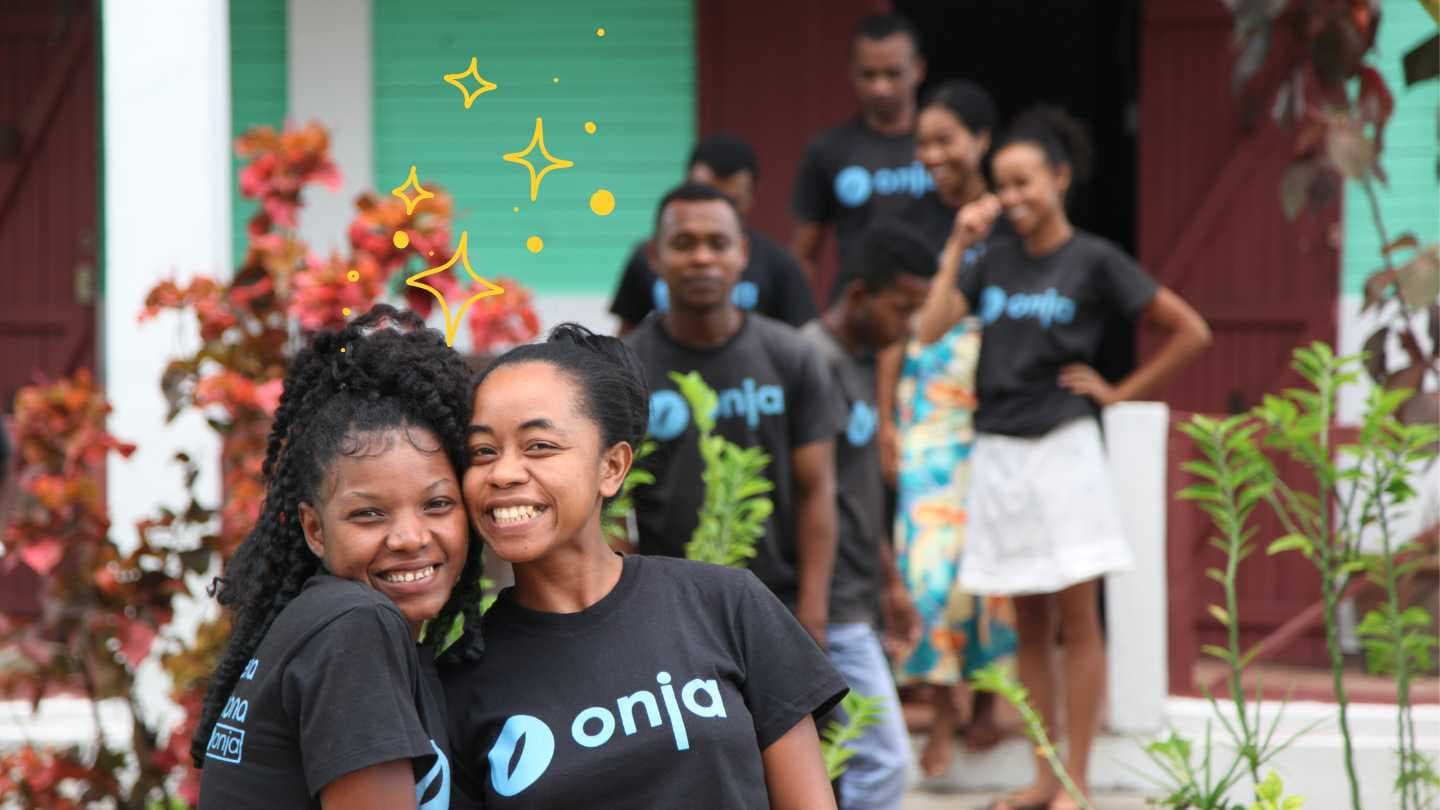
We talk about why it's valuable to build a socially responsible tech team and explore actionable steps for organisations to achieve this goal, drawing insights from our experience in training talented and underprivileged youth to become software developers in Madagascar...
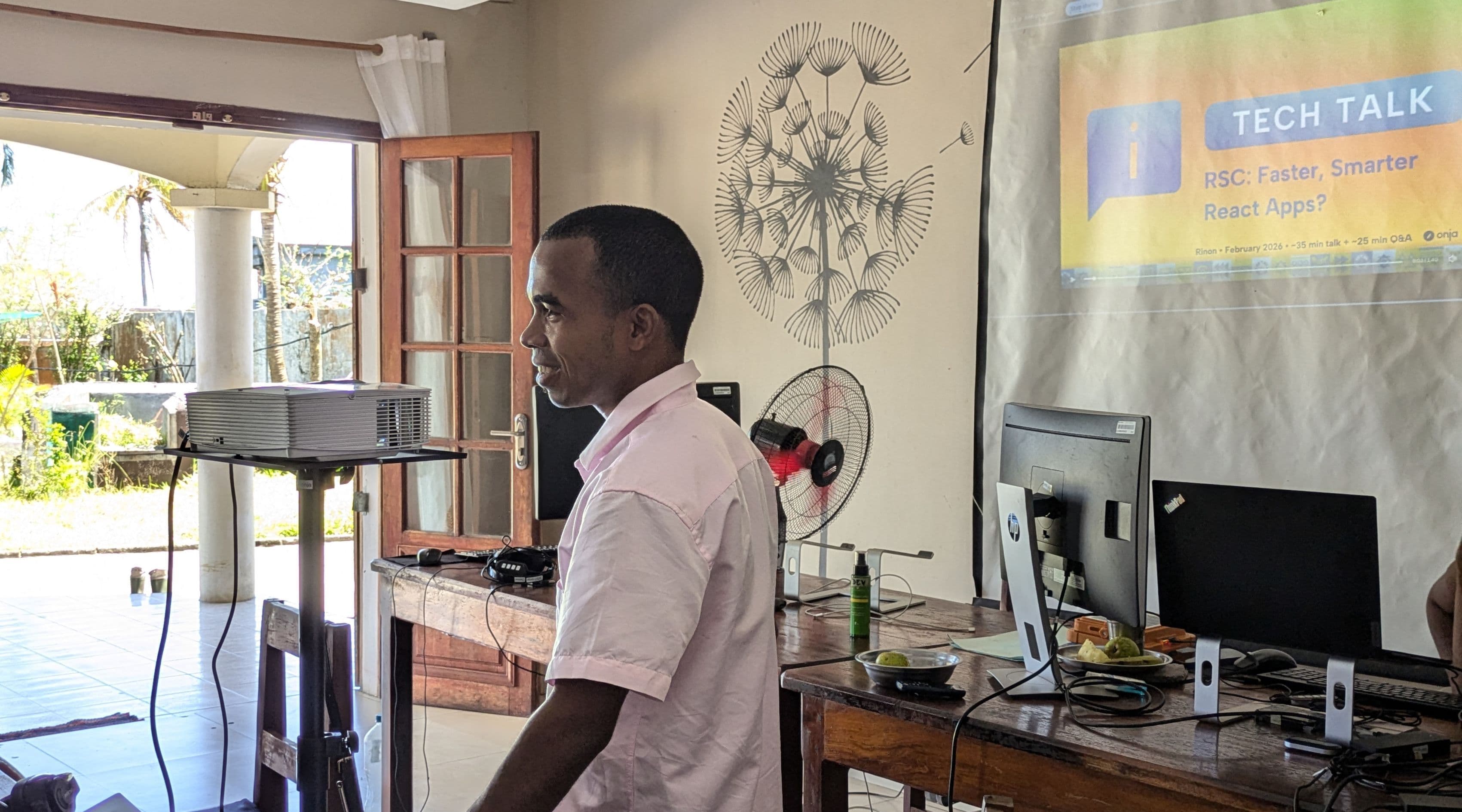
As Onja's Professionalism and Communication Mentor, Adrià Trepat, originally from Barcelona brings a background in international business and leadership development. He believes the right support at the right moment can transform a career. As AI reshapes industries, Adrià has expanded Onja's Tech Talk series to keep developers ahead of evolving job market demands. Read on to learn how we're helping underprivileged Malagasy youth thrive as world-class software developers...
Get Started
Request a call with the Onja team