
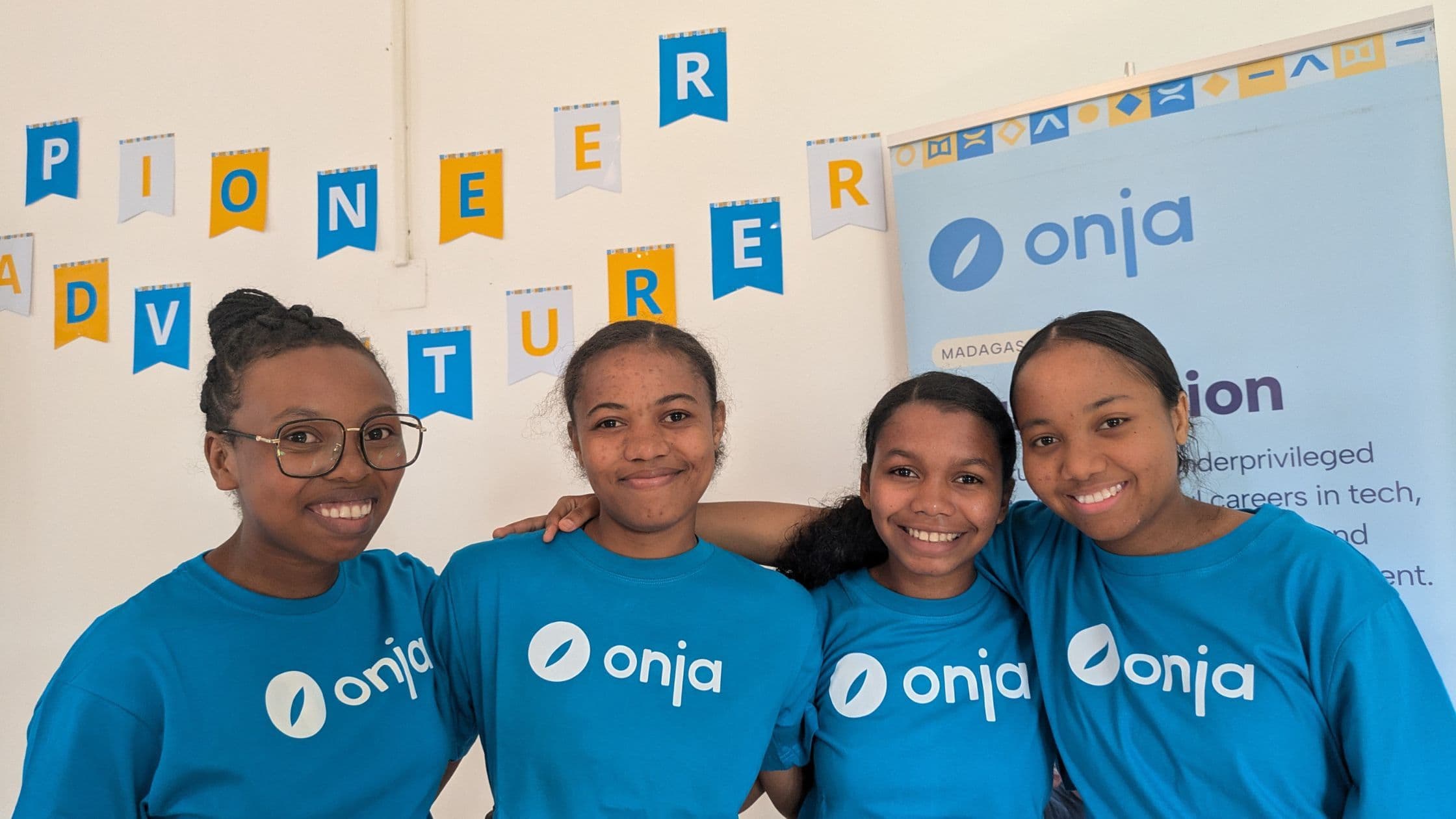
As a social enterprise based in Madagascar, you might wonder why we’re always communicating in English. After all, Malagasy is the native language for most of our team members including Onja students and developers!
In actual fact, speaking English on campus plays a key role in achieving Onja’s mission. In this blog, we’ll share the main reasons why we speak English at Onja, and how we ensure it’s done in an effective and thoughtful way.
Onja’s mission is to train underprivileged youth into world-class software developers in top international tech teams. That means that after graduating, Onja students are competing in the global market with native English speakers and people who are fluent in English. This is a high stake goal: students must reach a professional level of English that is required in the companies and industry they will work in.
Our custom made English courses are designed to bring Onja students from a beginner level to a professional level within 2.5 years. But that’s not all. We combine this approach with another key ingredient: an immersive English environment for our students.
Studies have found that immersion learning is a really effective way to improve language proficiency (1), but academia aside, anyone who has learned a language through immersion could tell you that! It offers students a naturalistic environment to acquire the language in the same way we acquire our mother tongue. It also provides continuous exposure, immediate feedback and an authentic communication with native speakers that accelerates fluency.
Immersion is generally acquired through authentic settings that usually require learners to study or live in an English speaking country. Since our students are in Madagascar, we decided to set up our own immersive environment right here at Onja. This way, students are fully surrounded by the English language. For example, students listen to songs, podcasts, radios in English, read books in English, watch movies in English etc. and most importantly speak English all the time!
From our experience, it’s very easy to unintentionally slip into other languages even if we make the effort to speak English on campus to support immersion learning.
Studies show that “our languages aren't just static throughout our lives but shifting, actively competing and interfering with each other” which also makes learning a new language harder (2). To ensure we create a truly effective immersive English environment for Onja students, we take our commitment to speak English to the next level with a language pledge!
A language pledge is a commitment to exclusively use the target language - in our case English - in all of our communications with other pledgers, inside and outside of Onja campus. It’s an effective tool many language schools and programmes around the world have implemented. At Onja, it helps us to stick with English even when it feels easier to switch to another language when we can’t find the right word, for example. Also, because the pledge applies everywhere, not just on campus, it creates constant exposure, keeps English top of mind, reduces slip-ups, and effectively supports the immersive environment.
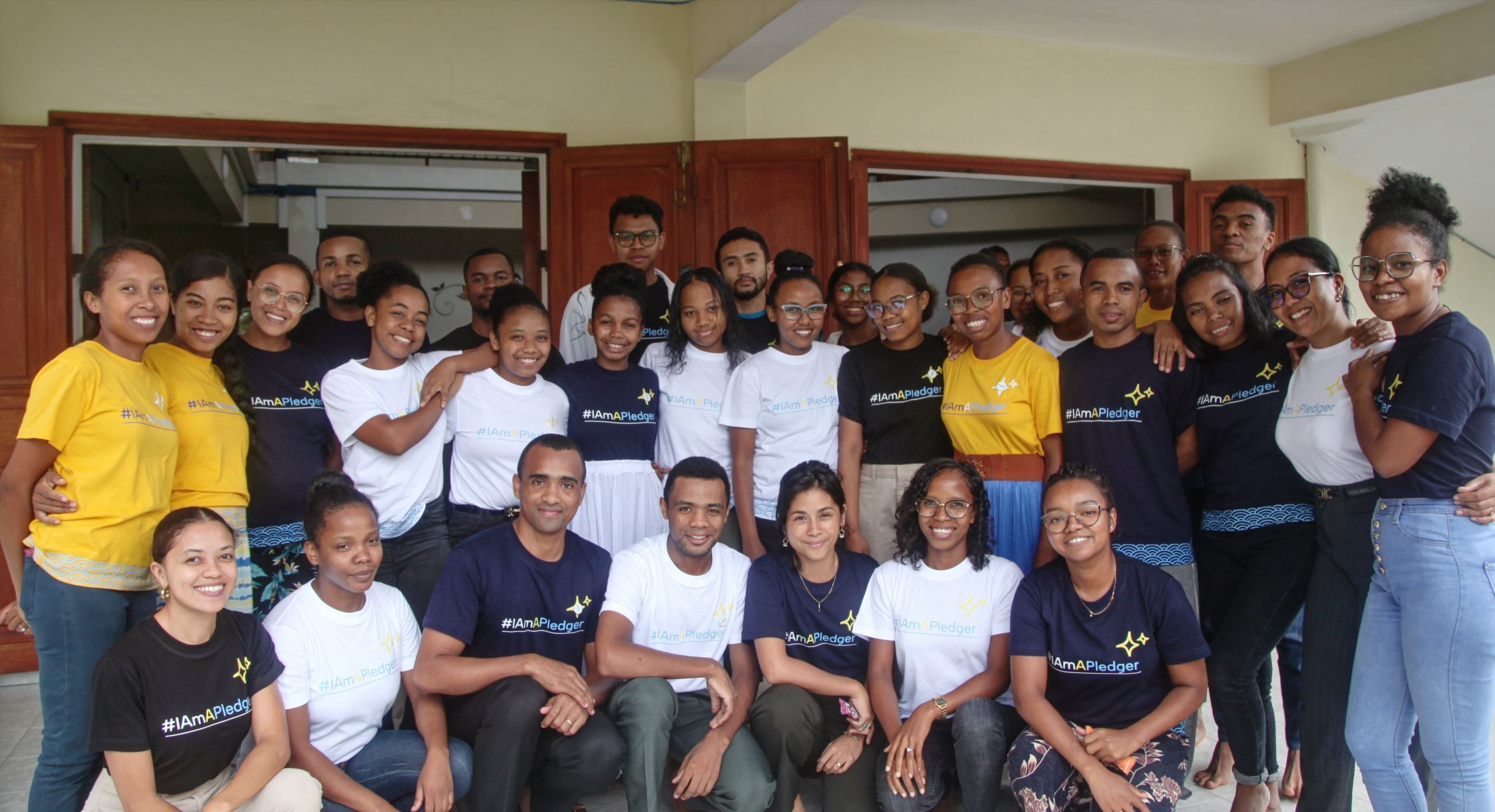
‘Think of the language pledge as a diamond in the making. Pressure might feel intense but it shapes you into something stronger and more brilliant’, says Noeline, one of Onja’ developers and a ‘pledger’. Students pledge for the duration of the training programme, and for the first two years of work with the option to renew. Staff members are also encouraged to pledge for a renewable two-year period.
How do we know it works? The language pledge was key to the success of our first wave of students, now software developers working remotely in top international tech teams! But it has also helped many of our Malagasy staff to hone their English language skills while contributing to the mission.
Our most recent language pledge ceremony took place in May 2025. Students from the second cohort and staff members took the pledge, while developers of the first wave of students renewed their commitment!
Overall, why we speak English has more to do with our mission rather than just a choice of language. We’re mission driven and everything we do is designed to serve that mission. However, we’re also mindful that Onja is a multicultural team, and one of our core values is the respect for Malagasy culture and values. So we always aim to strike the right balance between speaking English consistently to support our students’learning, and nurturing inclusivity and togetherness for our community.
So, the language pledge comes with a few thoughtful exceptions. For example, we speak Malagasy with non English speaking team members, close friends or family members who come to visit us on campus. During traditional Malagasy events like welcoming a newborn or offering condolences to Malagasy colleagues or students, we would switch to Malagasy for the speeches, and make sure to translate for our international team members who don’t speak fluent Malagasy (yet) so everyone is included! We also offer Malagasy classes for our international staff to become familiar with the language themselves.
Still, speaking English remains the top priority, and we’re grateful that everyone at Onja is committed to creating an immersive English environment for the benefit of current and future students.
Want to know more? Hear from our first wave of students as they share their experience with speaking English and the language pledge. Watch the video here
— Sources:
(1) Porter, S., & Sofia Castillo, M. (2023). The Effectiveness of Immersive Language Learning: An Investigation into English Language Acquisition in Immersion Environments Versus Traditional Classroom Settings. Research Studies in English Language Teaching and Learning, 1(3). https://doi.org/10.62583/rseltl.v1i3.18
(2) BBC Future, 2022. How speaking other languages changes your brain, 19 July. Available at: https://www.bbc.com/future/article/20220719-how-speaking-other-languages-changes-your-brain
Learn about how Onja's model connects talented young people with remote work in US and European countries...
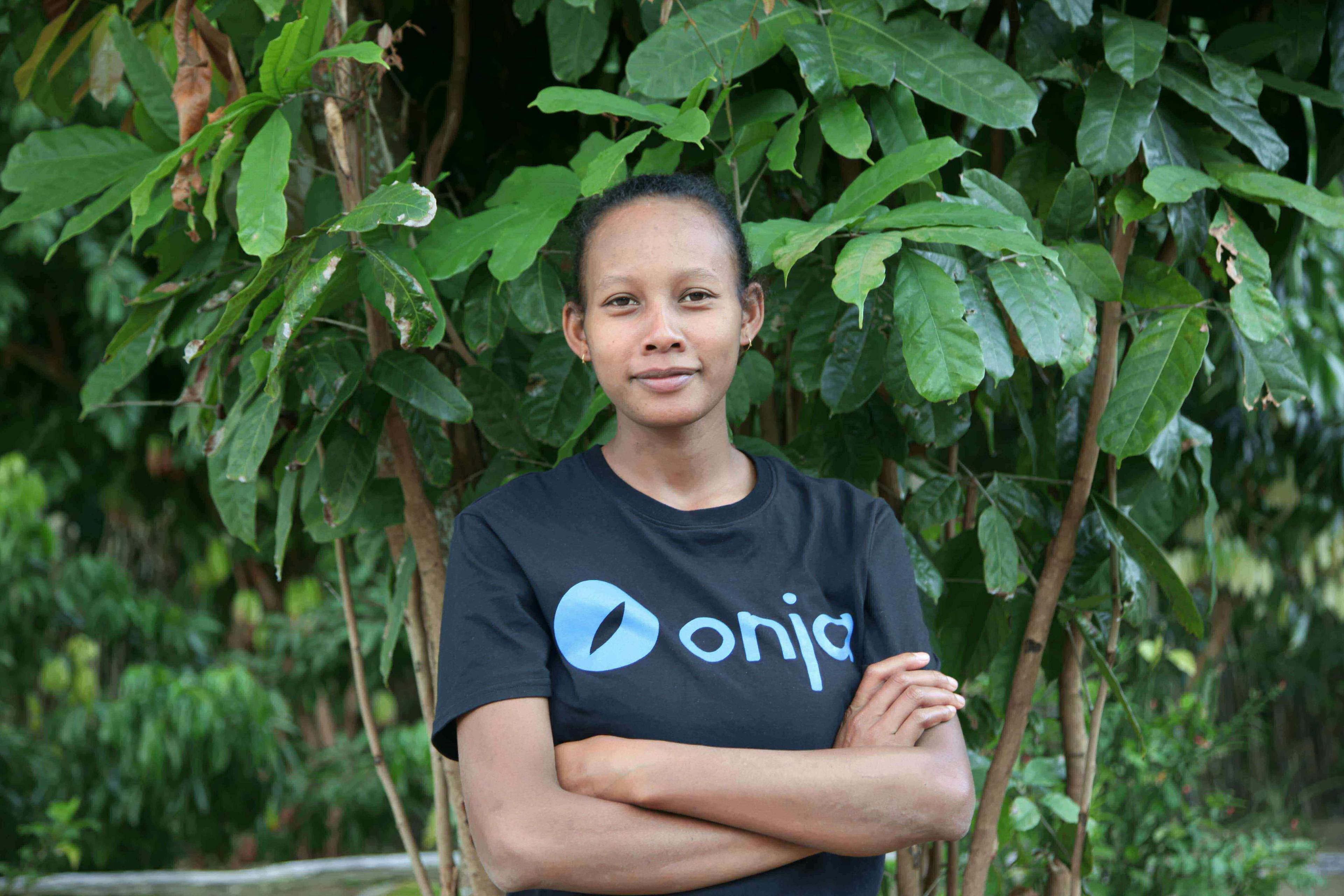
At first, it was really hard to study at Onja. None of us thought we would be able to do it in those years. We couldn’t really speak English in the beginning, and class was quiet because we didn’t want to make mistakes...
Rapid technological change is creating opportunities—but also widening inequalities. Closing the digital divide means connecting education to real labor market needs. Onja, a social enterprise in Madagascar, trains underprivileged youth in software development and English, giving them access to remote tech jobs with competitive salaries...
Get Started
Request a call with the Onja team